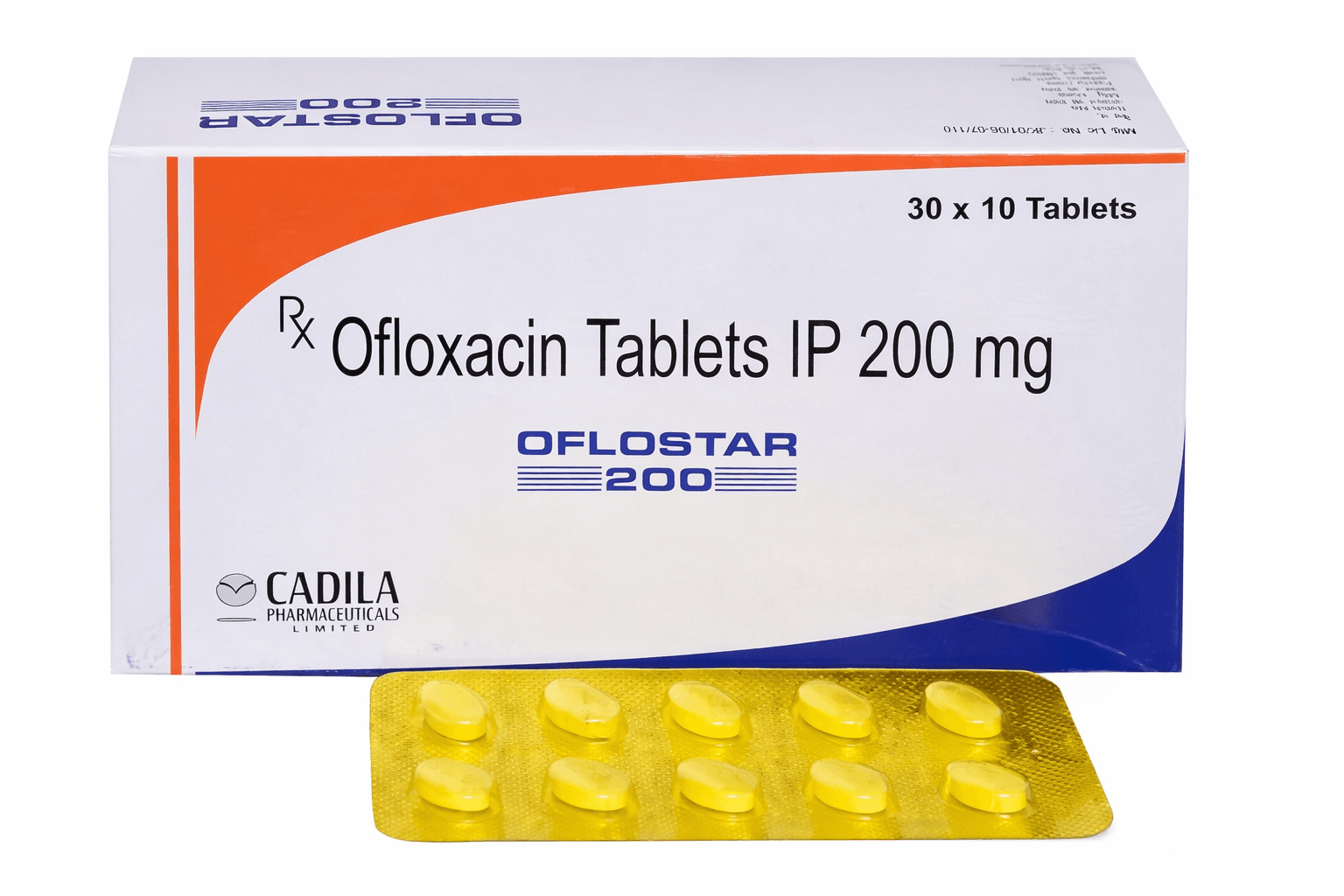
Ofloxacin Tablet is a broad-spectrum antibiotic used to treat a variety of bacterial infections, including those affecting the respiratory tract, urinary tract, skin, and gastrointestinal system. It works by inhibiting bacterial growth, helping the body clear infections effectively.
Specifications
Disclaimer
Product details are informational. Always seek medical advice before using Ofloxacin. Dosage and treatment must be determined by a licensed doctor.
Description
Introduction
Ofloxacin is a broad-spectrum antibiotic belonging to the fluoroquinolone class. It works by inhibiting bacterial DNA gyrase and topoisomerase IV, which prevents bacteria from replicating and repairing their DNA. As a result, Ofloxacin stops bacterial growth and helps the body eliminate the infection. It is important to note that Ofloxacin treats bacterial infections only and does not work for viral illnesses such as the common cold or flu.
Why Ofloxacin Is Used
Ofloxacin is prescribed when a doctor suspects or confirms a bacterial infection. Healthcare providers choose it because it:
- Works against a wide range of bacteria
- Penetrates well into tissues (prostate, urinary tract, lungs)
- Can be effective in infections resistant to some other antibiotics
- Is available in oral and ophthalmic (eye drop) forms
- Has good absorption and convenient dosing
Health Conditions Treated by Ofloxacin
Respiratory Tract Infections
- Bronchitis
- Pneumonia (bacterial origin)
- Chronic obstructive pulmonary disease (COPD) exacerbations
Urinary Tract & Kidney Infections
- Acute uncomplicated or complicated UTIs
- Pyelonephritis (kidney infection)
- Prostatitis (inflammation/infection of the prostate)
Skin & Soft Tissue Infections
- Cellulitis
- Wound infections
- Folliculitis (mild bacterial skin involvement)
Gastrointestinal & Abdominal Infections
- Certain types of infectious diarrhea due to susceptible bacteria
- Typhoid fever (based on local resistance patterns)
Sexually Transmitted Infections
- Certain cases of gonorrhea (only where susceptibility is confirmed)
Eye Infections (Ophthalmic form, not tablets)
- Bacterial conjunctivitis
- Corneal ulcers
(Eye-related uses apply to Ofloxacin eye drops, not tablets.)
Symptoms Treated by Ofloxacin
By targeting the bacterial infection, Ofloxacin helps reduce:
- Fever
- Painful urination or burning sensation
- Increased urinary frequency/urgency
- Lower abdominal or pelvic pain
- Cough and chest congestion (in respiratory infections)
- Skin redness, swelling, warmth, and tenderness
- Diarrhea caused by bacterial pathogens (when indicated)
Side Effects of Ofloxacin
Common Side Effects
- Nausea
- Vomiting
- Diarrhea
- Headache
- Dizziness
- Insomnia
- Abdominal discomfort
Less Common but Serious Side Effects
Seek medical attention if these occur:
- Tendon pain or tendon rupture (Achilles tendon most common)
- Peripheral neuropathy (numbness, tingling, burning)
- Severe allergic reactions: rash, swelling, breathing difficulty
- Heart rhythm changes (QT prolongation)
- Mood or behavior changes (rare)
- Severe diarrhea—possible sign of C. difficile infection
Diagnosis and When Ofloxacin Is Prescribed
A healthcare provider may prescribe Ofloxacin based on:
Clinical Evaluation
- Symptoms
- Physical examination
- Medical history
Diagnostic Tests (when needed)
- Urine tests (UTIs, prostatitis)
- Blood tests
- Culture and sensitivity tests
- Imaging like ultrasound or X-ray (for complications)
Doctors prescribe Ofloxacin only when bacterial infection is likely to help avoid antibiotic resistance.
How to Use Ofloxacin Safely
- Take exactly as prescribed by a doctor
- Do not exceed or reduce the dose
- Complete the full course even if symptoms improve
- Take with or without food (food may reduce stomach upset)
- Avoid excessive sun exposure; Ofloxacin may increase sun sensitivity
- Maintain adequate hydration
Important Safety Notes
Do not take antacids containing magnesium, aluminum, or calcium within 2 hours of the dose
Avoid taking iron or zinc supplements close to the dose
Avoid alcohol in excess
Inform your doctor about pre-existing conditions like:
- Heart rhythm disorders
- Liver or kidney issues
- Tendon problems
- Epilepsy or seizure history
Prevention & Management Tips
- Do not use antibiotics for viral infections
- Take medicine at the same time daily
- Drink plenty of water
- Avoid heavy physical activity if you experience tendon pain
- Keep medication away from children
- Never share antibiotics with others
Common Questions About Ofloxacin
How long does Ofloxacin take to work?
Most people begin to feel improvement within 48–72 hours, but the full course must be completed.
Can children take Ofloxacin?
Not routinely. Due to risk of joint/tendon issues, it is generally not recommended in children unless benefits outweigh risks and prescribed by a specialist.
Is Ofloxacin safe in pregnancy?
It is usually avoided unless absolutely necessary. Follow your doctor’s advice.
What should I do if I miss a dose?
Take it as soon as you remember. Skip it if it’s almost time for the next dose. Do not double the dose.
Can Ofloxacin treat STIs?
Only specific bacterial STIs and only when susceptibility is confirmed. Resistance patterns vary by region.
Does Ofloxacin interact with other medications?
Yes. It may interact with:
- Antacids
- Steroids (increase tendon rupture risk)
- Heart rhythm medications
- NSAIDs
- Iron/zinc supplements
- Drugs affecting liver enzymes
Always inform your healthcare provider about all medications you are taking.
Conclusion
Ofloxacin is a broad-spectrum fluoroquinolone antibiotic effective against many bacterial infections, particularly of the urinary tract, respiratory system, skin, and gastrointestinal tract. When used correctly under medical supervision, it helps reduce symptoms and supports recovery. Always follow the prescribed dosage, complete the full course, and watch for any unusual or severe side effects.